A summary of Danish bird news for June 2009, courtesy of Rolf Christensen at Skagen.
A drake Blue-winged Teal was at Hylteholme, Sydsjælland during 9th-10th and 20th. A Thick-knee was near Voerså, Nordjylland on 7th. A female type Black-winged Stilt was again at Firtalsstrand, Fyn on 9th-12th. A very unseasonal 2nd cal male Snowy Owl was at three Nordjylland coastal sites during 8th-19th. A singing male Blyth's Reed Wabler was ringed at Skagen, Nordjylland on 8th, and a Paddyfield Warbler was there on 21st (9th record). A male Lesser Grey Shrike was near Karup, Vestjylland on 8th. A male Black-Headed Bunting was at a garden feeding platform far inland near Krejbjerg Plantage, Østjylland during 29th May to 5th June.
Other June records include two Manx Shearwaters, two Shags - again past Skagen, Nordjylland, just three Black Storks, a very late/escape Red-breasted Goose in the Wadden Sea, five Red-crested Pochards, three Ruddy Ducks, a 3rd cal or older male Pallid Harrier at Ballum Enge, Sønderjylland during 25th-26th, one Pectoral Sandpiper, one Glaucous Gull, five Gull-billed Terns - but still no breeding attempts, a surprise 10 White-winged Black Terns past Margrethe Kog, Sønderjylland on 25th, one Hoopoe, 23 Bee-eaters including one flock of 18 past Gedser, Falster on 6th, the single and only remaining singing male Crested Lark still at Hirtshals, Nordjylland during 4th-28th, just two singing male Tawny Pipits during 5th-6th at the sole breeding site, at the island of Anholt, Østjylland, one Red-throated Pipit, six River Warblers, five Savi's Warblers, just one Great Reed Warbler, a female Barred Warbler ringed on 9th at Gedser, Falster - the year's only record so far following following a severe decline in recents years, eight Greenish Warblers, ten Red-breasted Flycatchers, three Nutcrackers and just one Rose-colored Starling.
Source: dofbasen.dk and netfugl.dk
Tonight, to take advantage of the still, warm weather, I am planning a night of birding - targets include Nightjar, Corncrake, Quail, Spotted Crake and then, at dawn, Greenish Warbler at Møns. Wish me luck!
Thursday, 2 July 2009


Monday, 29 June 2009
ID Challenge
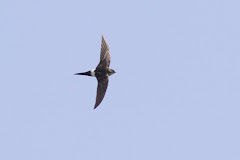
With Libby's parents here for the week, birding has taken a back seat for a while.. However, on a trip to the local old fishing town of Dragør, we were mobbed several times by this unidentified bird. It hung in the air like a Kestrel and then proceeded to drop suddenly before rising again and hanging in the wind.. any ideas?


Friday, 26 June 2009
Midsummer nights

This photo was taken from our flat window at 1230am on Wednesday night. It doesn't really get completely dark here in midsummer with a sort of half twilight between 1200 and 1500. Wednesday saw a particularly beautiful cloud formation that was brought to life by the soft light. Almost enough to turn me all spiritual and arty... or something.
Thursday, 25 June 2009
Sankt Hans
On Tuesday evening Libby and I joined our Danish friends to celebrate Sankt Hans (midsummer). I was intrigued by this ritual and looked into its history. In Denmark, the solstitial (great word) celebration is called "Sankt Hans aften" (literally "St. John's Eve"). 24 June was an official holiday until 1770, and in accordance with the Danish tradition of celebrating a holiday on the evening before the actual day, it takes place on the evening of 23 June. It is the day when the medieval wise men and women (the doctors of that time) would go out into the forests to gather special herbs that they needed for the rest of the year to cure people of their ills.
Since the times of the Vikings it has been celebrated by visiting healing water wells and making a large bonfire to ward away evil spirits. Today the water well tradition is gone. Bonfires on the beach, speeches, picnics and songs are now the tradition. In the 1920s a tradition of putting a witch made of straw and cloth on the bonfire emerged as a remembrance of the church's witch burnings from 1540 to 1693. This burning sends the "witch" away to Bloksbjerg, the mountain 'Brocken' in the Harz region of Germany where the great witch gathering was thought to be held on this day.
Of course most people don't even know why they celebrate and it's a good excuse for a get together, a few drinks and a BBQ. This year the weather was stunning - 25 degs during the day (it still gets a little chilly once the sun goes down) and clear blue skies. We celebrated Sankt Hans just north of Copenhagen at Charlottenlund where we had an evening picnic before the ceremonial fire-lighting at 10pm. Needless to say, a good time was had by all....
Photos: the bonfire; Kat (our best Danish friend); and Kamilla and Mike (just about to burst into traditional Danish song)


Since the times of the Vikings it has been celebrated by visiting healing water wells and making a large bonfire to ward away evil spirits. Today the water well tradition is gone. Bonfires on the beach, speeches, picnics and songs are now the tradition. In the 1920s a tradition of putting a witch made of straw and cloth on the bonfire emerged as a remembrance of the church's witch burnings from 1540 to 1693. This burning sends the "witch" away to Bloksbjerg, the mountain 'Brocken' in the Harz region of Germany where the great witch gathering was thought to be held on this day.
Of course most people don't even know why they celebrate and it's a good excuse for a get together, a few drinks and a BBQ. This year the weather was stunning - 25 degs during the day (it still gets a little chilly once the sun goes down) and clear blue skies. We celebrated Sankt Hans just north of Copenhagen at Charlottenlund where we had an evening picnic before the ceremonial fire-lighting at 10pm. Needless to say, a good time was had by all....
Photos: the bonfire; Kat (our best Danish friend); and Kamilla and Mike (just about to burst into traditional Danish song)


Tuesday, 23 June 2009
River Warbler
The gorgeous weather tempted me to catch the early train to Hillerød to seek out the River Warbler that had been reported for the last couple of days. I heard what I thought was a snatch of River Warbler song when Libby and I were on Bornholm in May but unfortunately we didn't have time to investigate it properly, so it would be a new bird for me in Denmark. It was a beautiful still morning when I arrived at the forest area and immediately I could hear the bird, even though I was probably about half a kilometre away at that point. It was singing constantly (it sounds like a cicada) and luckily, when I arrived at the right place, it was singing from a birch tree right beside the path. It showed pretty well for a species known to be secretive and elusive and sang almost constantly for the hour and a half I was there. Amazingly, I didn't see another birder - bliss!
The habitat in the surrounding area was very impressive - lots of wet, boggy birch forest with open meadows. It looked great for Corncrake, too, but despite my efforts I couldn't hear one. A bit further along, there were two pairs of Red-backed Shrikes obviously feeding young in the nest. They were hunting from the tops of bushes, mostly catching wasps. It is great to see these birds - once common across England - doing well in open heath areas, not dissimilar habitat to the Brecks.
Photos below: River Warbler; adult male Red-backed Shrike


The habitat in the surrounding area was very impressive - lots of wet, boggy birch forest with open meadows. It looked great for Corncrake, too, but despite my efforts I couldn't hear one. A bit further along, there were two pairs of Red-backed Shrikes obviously feeding young in the nest. They were hunting from the tops of bushes, mostly catching wasps. It is great to see these birds - once common across England - doing well in open heath areas, not dissimilar habitat to the Brecks.
Photos below: River Warbler; adult male Red-backed Shrike


Monday, 22 June 2009
Autumn migration
My first trip out for two weeks due to a combination of work commitments and being struck down by shingles (very painful) was notable for the number of waders passing through. These birds will be on their autumn migration south, presumably failed breeders, together with immature birds. Good numbers of Ruff, Green Sandpiper, Greenshank and Dunlin were noted. An immature black-throated diver offshore was also worthy of mention. Still no sign of any local Greenish Warblers - this species is a very scarce breeder in Denmark, mostly on the island of Bornholm, but there are usually a few singing males each spring on the main islands of Sjaelland and Jylland. There has been one reported at Møns Klint but that is at least 2 hours by train and over 5 hours by cycle, so I think I'll give it a miss...
Monday, 8 June 2009
Sunday, 7 June 2009
Rosefinch: the invasion
Today I spent late afternoon/evening at Stevns Fyr (Stevns Lighthouse), about an hour south-west of Copenhagen. A few days ago a couple of Rosefinches were reported and I thought I'd try to see if they were still around. Rosefinches are a bit of an enigma. They are pretty rare in the UK and most of the records are young birds which are very drab brown looking things.. Rarely is the UK graced with a spectacular red adult male. In Denmark, Rosefinches are officially "scarce" ie more common than rare but not widespread. Even though the majority of records in Denmark are young birds, they do breed here in small numbers.
I arrived at about 4pm, a pretty quiet time in birding terms (birds are usually most active first thing in the morning and in the evening). There was no sign of any rosefinches but I did manage to see a Grey Partridge (only my second in Denmark), 6 Icterine Warblers and some House Martins nesting on cliffs (that's what they used to do before houses were built!). I walked up the coast admiring the Danish cliffs (they are not very high but in Danish terms they are mountainous) and, on my return, I immediately heard a Rosefinch singing. It was a young bird (2k as they call it here - a second calendar year bird, born last year), so very drab and brown. As I was watching it sing I heard a second bird singing only a few metres away. I moved towards the second bird and I was stunned to see a cracking red male singing on top of a bush.. wow! Then, just a few seconds later, a female popped up next to the male with the young male still singing.. that's 3 birds in the space of about 50 metres! All 3 continued to entertain for a couple of hours on and off.. when they weren't singing they were surprisingly elusive. It is the first time I have seen a red male so I was very pleased indeed.. I wasn't sure whether it was an adult - the red on the breast was limited so maybe a 3rd year bird? Views welcome. Hopefully they will breed.
Photos: the 'red' male; the pair; and the young male


I arrived at about 4pm, a pretty quiet time in birding terms (birds are usually most active first thing in the morning and in the evening). There was no sign of any rosefinches but I did manage to see a Grey Partridge (only my second in Denmark), 6 Icterine Warblers and some House Martins nesting on cliffs (that's what they used to do before houses were built!). I walked up the coast admiring the Danish cliffs (they are not very high but in Danish terms they are mountainous) and, on my return, I immediately heard a Rosefinch singing. It was a young bird (2k as they call it here - a second calendar year bird, born last year), so very drab and brown. As I was watching it sing I heard a second bird singing only a few metres away. I moved towards the second bird and I was stunned to see a cracking red male singing on top of a bush.. wow! Then, just a few seconds later, a female popped up next to the male with the young male still singing.. that's 3 birds in the space of about 50 metres! All 3 continued to entertain for a couple of hours on and off.. when they weren't singing they were surprisingly elusive. It is the first time I have seen a red male so I was very pleased indeed.. I wasn't sure whether it was an adult - the red on the breast was limited so maybe a 3rd year bird? Views welcome. Hopefully they will breed.
Photos: the 'red' male; the pair; and the young male


Subscribe to:
Posts (Atom)



 Posts
Posts


