Sunday, 12 April 2009

La France

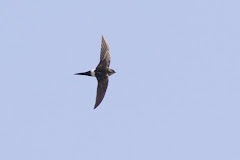
Libby and I have just returned from a walking trip in the south of France. Over 5 days we walked from La Brigue in the French Alps to Menton, a lovely old seaside town on the Mediterranean coast just east of Monaco. We booked through a company called Inntravel. They arrange for luggage to be taken from one hotel/auberge to the next and send detailed maps and directions for the walks, including options to extend or shorten the walks, depending on your mood and the state of your legs! The route that we chose - "The Alps to the Mediterranean" - was fantastic with some of the best walking we have experienced, especially the stretch between Sospel and Menton. Stunning snow-capped mountains, sheer-sided gorges and magical forests made the walk a real pleasure. As always in France the food and wine were fantastic too. Everything just tastes so much better when you have been outdoors all day. Although not a birding trip I did manage to see quite a few good birds. The trip started well when I saw around 15 Alpine Swifts hawking around a road bridge just outside Nice airport. And when I opened the curtains on our first morning in La Brigue, I was greeted by the sight of 4 Short-toed Eagles hunting along the ridge opposite our hotel. Fantastic. The stream below produced Grey Wagtail, a few Black Redstarts were feeding in the local gardens and a Wryneck was a nice surprise in the park. Over the 5 days the walks produced Golden Eagle (3), Crag Martin (lots), Western Bonelli's Warbler (4-5), Rock Bunting (3), Firecrest (many), Black Woodpecker (at least 3 heard), Common Redstart and Cuckoo as well as the seemingly omni-present Serin.

On the coast at Menton, visible migration was in full-swing with Swallows streaming through in an almost constant procession with a supporting cast of Common and Alpine Swifts, a few House Martins and the occasional Sparrowhawk or White Stork.

Our visit to Menton coincided with a women's football international tournament. We stumbled across a match involving Denmark and Russia on an artificial pitch near our hotel. Despite us swelling the crowds cheering on our adopted homeland (I don't think it would be an exaggeration to say that we doubled the Danish support), the Danes went down 2-0 to a very competent Russia team. A post-match tour of the old town and the seafront, sampling the local cuisine was a very pleasant end to our stay in France and a welcome rest for our weary muscles.

Photos: a house at La Brigue, our starting point on the walk; a street in Saorge, one of the pretty mountain villages in the Maritime-Alps; a view of Tende from the hills above La Brigue; some of the violet-coloured flowers that adorned our route (are these violets?); and Libby working out our route.


Saturday, 4 April 2009

Kongelunden

The promise of a warm, sunny spring day meant I was up at 5am and, by dawn, I was on my bike and well on my way to Kongelunden, on the southern tip of Amager. I counted around 15 Chiffchaffs singing during the journey and, on arrival at Sydvestpynten (Southwest point) I was greeted with a flat calm sea and a degree or two of frost.

During a 2-hour vigil on the point I saw: 1 Grey Wagtail, several flocks of migrating Great and Blue Tits (I still can't get used to seeing flocks of tits coming in off the sea - seems weird!), 3 White-fronted Geese, 12 Barnacle Geese, 1 Skylark, 20 Starlings, 6 Red-necked Grebes, 9 Sandwich Terns, 4 Reed Buntings, 2 Pintail, 11 Wigeon, 7 Shoveler, 1 Smew, 14 Red-breasted Mergansers, 18 Eider, 6 Tufted Duck, 45 Goldeneye, 3 Sparrowhawks in off, 1 Curlew and a singing Redwing in the bushes just inland.

I then decided to search the woods, hoping for some woodpeckers and, possibly, a Nutracker or two. I missed the Nutcrackers but I did see 8+ Great Spotted Woodpeckers, 1 Lesser Spotted Woodpecker, 2 Nuthatches, 2 Hawfinches, 8 Brambling and a Woodcock. The Woodpeckers were busy preparing nestholes (see below) and the Bramblings were looking resplendent in their jet black hoods. I also came across this amazing root system, belonging to a storm-blown spruce...

Danish news from yesterday included a Spotted Eagle sp a few miles north of Copenhagen. Seen twice and identified by the first observer as a Greater Spotted and by the second as a Lesser Spotted! It is very early for a Lesser Spotted (a summer visitor to northern Europe, usually arriving mid- late May) but Greater Spotted have been known to winter in southern Sweden (there were at least two sighted this winter just across the bridge) so it is more likely to be a Greater. Hopefully it will get seen again today and identified with certainty.... either way it's a magnificent bird to see!

Photos: an uprooted spruce; Great Spotted Woodpecker holes; and the regular roosting Tawny Owl


Friday, 27 March 2009

Vis-mig

"Vis-mig", or visible migration to give it its full title, is an aspect of birding that I have always enjoyed, primarily because of growing up on an east coast location in the UK with plenty of birds moving through in spring and autumn. The good thing about vis-mig is that you can do it from almost anywhere with a view of the sky - a headland, a hill or even an office with a window. Now, I don't want you to get the impression that I spend a lot of time looking out of the window when I am working (this is in case my boss is reading!) but today I glanced out of my flat window in central Copenhagen and saw three groups of Cranes (flocks of 22, 8 and 18 respectively) and 3 Common Buzzards plus my first White Wagtail of the year. All in the space of 10 minutes. Not bad for a central city location and some compensation for being stuck to my desk most of this week.....

Thursday, 26 March 2009

Cranes

This week is traditionally the big "Crane Week" here in Denmark as these magnificent birds work there way up from their wintering grounds in continental Europe to their breeding areas in central and northern Sweden. Any sort of easterly component to the wind means that many of the large flocks are driven further west and, as a result, provide a spectacular backdrop to the views over Copenhagen. This week the weather has been dominated by high pressure and easterly/south-easterly winds. Yesterday (Wednesday) saw record numbers from some Danish viewpoints, including at Hellebaek, just north of Copenhagen. You can see a photo here.

Saturday, 21 March 2009

Sweden: the revenge

The news of the Great Grey Owl was too good to resist, so I made a 4.30am start on Friday to get there for dawn, knowing that I could have a good three hours on site and still be back by lunchtime. Public transport to Falsterbo from Copenhagen is pretty impressive, involving a train from Copenhagen to Malmo and then a bus from Malmo to Falsterbo. The train takes just 25 mins from Copenhagen, with trains running every 20 minutes from 0520 and then the bus journey from Malmo to Falsterbo takes 45 minutes, with buses leaving every 30 mins. I arrived on site at 0700 and there were no birders around so I began to search.. I easily found where it HAD been due to the smattering of pellets and droppings underneath a pine tree. However, the bird was nowhere to be seen and despite searching for the next three hours, with a gradually increasing number of birders, it wasn't found. The area is pretty extensive and it is very likely that it is still there somewhere, so I may be doing it all again next week...!

Despite the lack of Great Grey Owl, the morning was very enjoyable.. It was a fantastic spring day with blue skies and no wind. Walking through the woodland produced a Woodcock, a flock of 150+ Common (Mealy) Redpolls, including some fantastic-looking males, a Rough-legged Buzzard and my first singing Chiffchaff of the year. There was also a report of a Tengmalm's Owl found roosting in a pine near to the Great Grey Owl site although unfortunately that was later in the afternoon after I had made my way back home. In a sheltered spot I also found two Brimstone butterflies sunning themselves. The temperature was around 5 degrees so they were a bit sluggish but they posed nicely for the photograph below using a 100mm macro lens.

There was a Great Grey Owl reported at Falsterbo in the autumn and there is speculation that this is the same bird and has spent the winter in the area. From the pellets and droppings it certainly looks as if the bird has been roosting in that area for several weeks at least... and with the lack of birders searching the area at this time of year it is distinctly possible that this bird, despite its huge size, has gone undetected.

Photos below (click to enlarge): The tree where the Great Grey Owl was the day before; a Great Grey Owl pellet; some of the Common Redpolls in the roving flock; and my first butterfly of the year - a beautiful Brimstone.


Thursday, 19 March 2009

Short-toed Treecreeper

It has been very spring-like this week with clear skies and light winds. The birds are responding with many of our resident birds now in full song in the early mornings. I was walking through my local park this morning when I heard the distinctive song of the Short-toed Treecreeper. This is a very close relative of the Eurasian Treecreeper we see in the UK. In Denmark the range of the Short-toed and Eurasian overlap, so it is one of the few places where both can be seen. They are notoriously difficult to separate in the field on sight views alone but, luckily, they have distinctive voices. You can hear the Short-toed Treecreeper here and the Eurasian Treecreeper here. Can you tell the difference?

This week has also seen news of another mega owl in southern Sweden - a GREAT GREY OWL. It is very rare for one of these impressive beasts to be seen so far south - normally they are a bird of the northern forests of Scandinavia. You can see a photo here. It is very close to Copenhagen, just across the bridge near Falsterbo, and easily accessible by public transport so I am going to catch a train and a bus tomorrow to try my luck....

Monday, 16 March 2009

Achnahaird

A long weekend on the west coast of Scotland with some non-birding but walking friends produced a few goodies, as well as a few sore muscles.. We were based at Achnahaird, just north of Ullapool. Magnificent views and some great walking, including the very distinctive Stac Pollaidh. Just offshore lie the Summer Isles, so called apparently because the sheep were sent there to graze in the summer (certainly nothing to do with the climate!). We enjoyed (and endured) mixed weather, including a Saturday morning of incessant rain, with high winds a constant feature. Nevertheless, I did manage to see 3 Great Northern Divers, a Golden Eagle, a Black Guillemot, several Ravens, tons of Buzzards and a Grey Seal. And, of course, it was all good for the soul... or something.

Wednesday, 11 March 2009

Tipping Points


Wake Up, Freak Out - then Get a Grip from Leo Murray on Vimeo.

Thanks to Beth for sending me this fantastic, and very accessible, short video. It's all about tipping points in the earth's climate and how we could very soon pass the point of no return. It is a worrying fact that the climate science set out by the Intergovernmental Panel on Climate Change (the UN-based authority on climate science) is, due to the natural conservative nature of scientists, likely to be an underestimate of the effects of manmade greenhouse gas emissions on global temperature. There are a number of so-called "feedback" mechanisms which are very likely to accelerate warming but, due to the uncertain nature of their effects, are not included in the official UN assessments on which policy-makers are making decisions. Another problem is that fact that the IPCC only produces updates every 6 years and the latest report, from 2007, is based on 2005 science, due to the time it takes to assess, review and agree the findings.

There is a Scientific Congress here in Copenhagen this week. The aim is to provide an update on the latest science for policy-makers ahead of this year's UN conference on climate change in the city in December. It will include an update on the latest science relating to these so-called "feedback mechanisms".

Science has moved on a lot since 2005 and it is giving us a very clear message - that man-made climate change is more severe and is happening at a faster rate than we thought.