Saturday, 21 February 2009

Waxwings, Woodlarks and a Wuff-leg

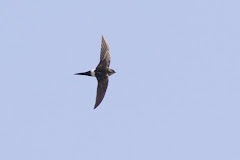
There are good numbers of Waxwing around this winter. A flock of between 100 and 150 can be seen most days from our flat as they wheel around central Copenhagen. Today I came across a flock of 200+ at Vestamager. They gave a wonderful display for about ten minutes, coming down to bathe and drink at a small ice-free patch on a nearby dyke, before a female Sparrowhawk blitzed through, spooking them all. Unfortunately they never came back - particularly unfortunate as the low sun was just emerging from the cloud that has seemed depressingly omnipresent this winter! Other highlights included 3 Woodlarks feeding on a roadside verge (just about the only place where the grass was not covered with snow, due to the splash over of salt put down by the local authorities), a Woodcock flushed from a forest path, 5 Mealy Redpolls, 6 Hawfinches and a distant Rough-legged Buzzard.

Photos below: Waxwing; Waxwing bath time; a Fieldfare; and a Woodlark (I risked my life on my belly in the middle of the road to get this shot - I hope you appreciate it! ;-)


Wednesday, 18 February 2009

In the trenches...

News from our French cousins, battling on the front line of birding on behalf of us all....

Thursday, 12 February 2009

Sweden


Photo above: Hawk Owl habitat at Valinge, Halland (can you spot the Hawk Owl?)

Just back from a very enjoyable trip to southern Sweden to look at a selection of the good birds that are wintering in the area. The weather was excellent - one of the best weekends all winter with mostly clear skies, light winds and lots of sunshine. Temperatures were down to -9 at one point in Vastergotland but, with no wind, it didn't feel that cold. Highlights included 2 HAWK OWLS (absolutely stunning birds), a GYRFALCON (a real monster of a falcon, positively dwarfing the Peregrine that was making pathetic attempts to scare it off), ORIENTAL TURTLE DOVE (obviously lost but, amazingly, returning for its 4th winter in a row on a suburban housing estate in central Sweden) and a PYGMY OWL (very cool) with a supporting cast of ROUGH-LEGGED BUZZARD, MEALY REDPOLLS, WAXWINGS etc. Some photos below. More to appear shortly (courtesy of Peter who managed much better photographs than me).

The Hawk Owls are just class - they have almost no fear of humans and, at one point, the Valinge Hawk Owl dived from its perch to catch a mouse just a few feet away from me (the end result of the swoop in the photo below). We had the pleasure of spending 5 and a half hours on Sunday watching this Hawk Owl, allowing study of its habits and behaviour. During that time it caught two voles and a mouse and coughed up a pellet (which I collected and aim to study later - don't tell Libby!). Most of the time it spent sitting, sentinel-like, atop a larch or pine tree, constantly turning its head at every sound. They clearly have incredible hearing. At one point my tripod squeaked a little as I adjusted it and, even though it was sitting on the top of a tree probably some 750 metres away at that time, its head spun round in a shot, its piercing yellow eyes fixed on me for a few seconds until another noise distracted its attention. A truly awesome experience to spend time with this arctic owl.

The other real highlight for me was the GYRFALCON. Having arrived at Getterons reserve on Saturday afternoon about an hour before dusk, we were hoping it would put in an appearance as the geese came into roost on the small patch of unfrozen water. The reserve visitor centre affords excellent views over the estuary and the warden told us that this was the best spot from which to view the falcon, which was a regular visitor during the early morning and just before dusk. So we ordered a cup of tea and sat looking over the spectacular vista.. Just as was taking my first sip, I caught sight of a HUGE falcon coming in low over the estuary from the north. Without lifting my binoculars I instinctively called out "GYR" and then, when I did get my binoculars onto the bird, I saw just how big it was - a Peregrine was mobbing it and it looked TINY in comparison. This GYR really was a beast. It scared the living daylights out of the local wildfowl and promptly sat on the saltmarsh to preen and bide its time before selecting which species of local duck or goose it was going to have for supper. It treated us to several passes, each time prompting much respect from the local ducks and geese, before finally settling on a wooden fence post some 400-500 metres out from the visitor centre. WOW.

Photos below (click to enlarge): Getterons Naturreservat at dawn (where we stayed at the observatory on Saturday night for GBP 11 each!); Hawk Owl at Valinge; Hawk Owl swooping for prey; Hawk Owl (Peter Ransome); Oriental Turtle Dove (Peter Ransome); and Pygmy Owl.


Sunday, 8 February 2009

Rough-legged Buzzard


Photos: Rough-legged Buzzard, Sydhavnstippen, Copenhagen, 31 January 2009

Denmark is a good place to catch up with the Fenno-Scandian cousin of our Common Buzzard - the Rough-legged Buzzard (RLB). Superficially very similar to Common Buzzard but, with detailed observation and knowledge about the key characteristics of RLB, they are actually pretty easy to pick out, even with fairly distant views.

Apologies for the quality of the photos (taken in poor light at long range etc etc) but, even though they aren't high quality, they still show the salient features. The best feature is the tail-pattern, with RLB sporting a white inner tail and a broad dark tail-band. This is best viewed from above (ie when the bird is banking). Other good plumage features include a lightish-coloured head, a dark belly and a prominent round, dark carpal patch on the underwing. With experience, structure and jizz become good indicators of this species -it is longer winged than Common Buzzard (to me, sometimes recalling a Kite species) and, when soaring, the wings are typically held at a dihedral (like aircraft wings - look it up!). RLB also actively hovers frequently when hunting for prey (not to be confused with Common Buzzard that can sometimes "hang" in the air facing a fresh or strong wind).

There are several of these migrant birds of prey wintering in Denmark this winter, with probably a dozen or more in the Copenhagen area alone. March or April will see them returning north to breed - the population is estimated to be between 80,000 and 100,000 in Europe/Russia. Meanwhile I will continue to enjoy getting to know these fantastic birds of prey.

Monday, 2 February 2009

Africa


Photos: jackal; leopard; lioness; and cheetah.

This winter Libby and I decided to break up the long, dark and cold Danish winter by taking a holiday in January. Destination was Kenya and Zanzibar: Kenya for safari and Zanzibar for a few days snorkelling and enjoying the coast. We spent 6 nights on safari - three at a new reserve in Laikipia (to the north-west of Nairobi) and then three nights in the Masai Mara. All I can say is WOW! The wildlife was simply stunning. I had no idea we would be just feet away from lions, leopards, cheetahs and the amazing array of Kenyan wildlife. And to drop off to sleep at night in a tent (completely unfenced) with the sound of lions roaring was an incredible experience. One morning we were awoken by the sound of an elephant brushing against our tent - and taking my first step out of the tent a short while later, I put my foot slap bang in the middle of a huge elephant footprint - some of those adults are enormous....!

We were incredibly lucky - we saw probably 100+ lions, 10 cheetahs, 3 leopards, 100s of elephants, tens of giraffes, 100s of buffalo, white and black rhino plus all manner of antelope species, hyenas, jackals and an amazing array of birds. I was in wildlife heaven. We even managed to spot the BBC Big Cat Diary's Simon King as he tracked a group of young cheetahs.

After the safari experience we flew to Zanzibar and stayed three nights at an eco-lodge on Chumbe Island, a coral atoll just off the capital of Zanzibar, Stone Town. Here we stayed in a truly sustainable eco-friendly wooden 'bungalows' with electricity and hot water provided by solar panels and showers from collected rainwater. The food was all locally produced and I have to say, it was amazing. The snorkelling was out of this world with sea turtles, 100s of colourful fish, starfish, the very poisonous conefish and, for me, the star - the coconut crab. These huge crabs (they are up to 50cm across) are nocturnal and are so-called because they love coconuts and have been known to climb the coconut palm to collect coconuts off the tree. Apparently they are very good to eat so they have all but died out over most of the region but on the island they are protected, so we were very lucky to see them.

On our last day we took a guided tour around Stone Town. This is an incredible place with a very rich history and influences from India, Oman, the UK and Portugal as well as Africa. It was the hub of the slave trade and also the base from which the great explorers, including Dr David Livingstone and Henry Stanley, began their travels. It was very sobering to see the cells in which slaves were kept while waiting for transportation to other parts of the globe - the conditions were just horrendous. Probably less well known is the fact that Freddie Mercury was born there and his birthplace is now an art gallery and museum! (good quiz question!).

All in all a great trip and I am sure we will be back... and we will watch Big Cat Diary with a whole new perspective!

Saturday, 24 January 2009

Winter fayre

A cycle ride to Amager today produced some quality winter birds. First, a staggering 110 SMEW (a large percentage were stunning drakes) were split into 3 or 4 loose flocks on the narrow sea channel between Amager and Sjaelland. These were accompanied by around 40 GOOSANDER, a handful of RED-BREASTED MERGANSER, a single GREATER SCAUP and a few WIGEON. The only Grebes in evidence were around 50 LITTLE GREBES.

A bit further along the path, I scanned a group of loafing gulls and there was an adult COMMON GULL with a colour-ring on its right leg. I was able to read the letter/number combination so I have reported it to the BTO (British Trust for Ornithology) via their very useful website. Hopefully I will receive information about this bird within a few days that will tell me where and when it was ringed. Colour-ringing is an increasingly used method of tracking birds. Rings can vary from a large-ish colour ring with a letter/number combination that can easily be viewed in the field with binoculars or a telescope (most suited to relatively large birds) to a combination of smaller blank rings, often used in specific combinations on one or sometimes both legs. Colour-ringing allows birds to be recorded in the field which results in many more reports of ringed birds than the traditional small metal ring that requires either a re-trapping of the bird, or the find of a corpse, to retrieve any data about a bird's movements. The bird I saw today had a large red ring on its right leg with "M84" written in large white characters. It's probably been ringed fairly locally but, you never know, it could have come from Russia, the UK or even further afield. We shall see!

Finally, the highlight was an adult WHITE-TAILED EAGLE that came in fast and low over a flock of BARNACLE GEESE that I was watching - the geese were spooked and took to the air with an awful stressed honking sound but luckily for them the eagle seemed to be just wanting to sit where the geese had been feeding - it sat on a small rock and preened itself, accompanied by the attentions of the local Hooded Crows.

Monday, 19 January 2009

You twit(e)s


Well, thank you to all 3 of you (mum, dad and my brother?) for voting in the poll... Either nobody is reading my blog (most likely explanation) or you all have better things to do than vote in a crumby bird quiz on the internet..!

In any case nobody got it right. The bird is a TWITE. These are northern birds that breed at high elevations in northern and western Scotland, northern England, Scandinavia and elsewhere with mountain ranges (Turkey, Caucasus etc). They come down to sea level in winter to feed, usually on coastal salt-marshes or dunes systems. Very much like a LINNET, its much commoner relative, but with generally whiter underparts, a yellow bill in winter, an unmarked throat and a buffy-orange face (as opposed to a greyish face in Linnet). The tail of the Twite is also longer and more deeply forked. Perhaps the most obvious difference, although sometimes difficult to see, is the pink rump of adult Twite. This can be frustratingly difficult to see, with the rump often covered by wing feathers, but it is a diagnostic feature. In Denmark these birds are winter visitors, usually in small to medium sized flocks along the northern and eastern coasts.

The photos above are of two different individials in the same flock.

Friday, 2 January 2009

Mystery Bird Competition


2009 got off to a good start when I connected with the American Black Scoter that has been present on the north coast of Sjaelland for a few days. It is hanging about with a few Common Scoter and seems to be taking quite a bit of interest in one of the 'Common' females, even displaying at one point today... You can see a photo (not mine unfortunately) by clicking here. It was a bitterly cold night last night (apparently about -8 when I arrived at first light) with a cold northerly breeze coming in off the sea. Six layers (including two 'down' jackets) and a pair of gloves approved for -30 degrees were enough to keep me snug.

After enjoying the scoter flock, I had a good look around the pine forest and dunes nearby. Plenty of Coal Tits, Goldcrests, a pair of Marsh Tits and a Treecreeper was my reward.

I also saw the bird in the photo above and thought I'd test you birders (and budding birders) by asking you for your opinion. Simply make your vote on the panel to the right of the screen and all will be revealed next week... (click the photo for a larger version).

Good luck!