Tuesday, 29 April 2008

Morocco


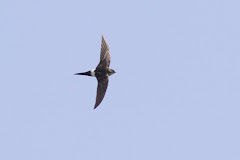
Photos (top to bottom): The sand dunes at Erg Chebbi; Yellow Wagtail (of the subspecies Iberiae or Cinereocapilla); Thick-billed Lark; Desert Sparrow; and White-crowned Black Wheatear

Mid-April saw me, with a couple of birding friends from England, travel to Morocco for a few days to catch up with some species that are very difficult to see in Europe. The trip started with a flight to Marrakech and took in the Atlas Mountains to see species such as Crimson-winged Finch, Alpine Chough and Moussier's Redstart, then east to the desert of Merzouga (via the famous Tagdilt Track) and then west to the Atlantic coast of Agadir (for Bald Ibis, gulls and waders) and then north to Merja Zerga for Marsh Owl. My impressions of north Africa had always been tainted by a brief holiday to Tunisia about 10 years ago where we stayed in a soul-less hotel, were constantly hassled by locals and then got food poisoning. So I was a little apprehensive about going back to the region. But I have to say that this trip has completely changed my opinion of north Africa. What a country. The people were, with the exception of the EMP (Evil Marsh People) at Merja Zerga, extremely friendly and hospitable, the food was excellent (tagines, I love 'em) and the scenery dramatic (from the beautiful Atlas mountains to the orange sand dunes of Erg Chebbi, the coastal cliffs of Tamri and the semi-desert plateaus around the centre. Simply stunning. And of course, extremely cheap (one of the places we stayed in cost us GBP 4 each for the night!).

Overall we saw 214 species of bird including some very sought-after species such as Thick-billed Lark (what a character!), Desert Sparrow, Hoopoe Lark, Blue-cheeked Bee-eater, Desert Warbler, Fulvous Babbler, Tristram's Warbler, Black-crowned Tchagra plus Lanner, Barbary Falcon and "Pharaoh" Eagle Owl. Top class birding.

The poverty is difficult to handle with many people clearly living on next to nothing. No matter where we stopped along the way, in the middle of the desert, in the mountains or on the plains, inevitably within about 2-3 minutes we would be approached by someone who seemed to appear out of thin air. One guy we spoke to lived in a cave and caught birds with home-made traps for food. Many of these people were simply lonely and very keen to chat rather than looking for any handouts but this was different at Merja Zerga. This marsh is the site where, until recently, the last known Slender-billed Curlews wintered (now presumed extinct). Now it is still very popular with birdwatchers due to its obliging Marsh Owls. So the locals are used to lots of birdwatchers turning up in the area. This shows as, as soon as you arrive on site, masses of children and adolescents turn up claiming to be able to show you the owls (for a fee, of course). We lost count of how many "official wardens" we bumped into, most wearing nothing on their feet and claiming to be the authority who must be paid before we were allowed to look for birds. We had to give one guy the last of our digestive biscuits to go away, taking his yappy dogs with him!

The traffic police were also a constant presence - seemingly two guys on every junction. We were stopped once for speeding and told to pay a fine of 400 Dirhams (about GBP 23) which could be reduced to 200 Dirhams if we didn't want any "paperwork". What a scam.

I couldn't complete this entry without a note on the famous Tagdilt Track. This is, as it says on the tin, a track (definitely not a road) that takes you to Tagdilt from Boumalne du Dades (in the mid-east of the country). It is a high plateau of semi-desert between the High Atlas mountains and a slightly lower range of mountains to the south. It is one of THE best places known to man to see all manner of LARKS. It also doubles up as the local refuse tip (with plastic bags galore) and a loitering area for the local stray dogs, all of which makes for a unique birding experience. But what a place - we saw Thick-billed, Desert, Bar-tailed, Temminck's, Hoope and Short-toed Larks plus Red-rumped Wheatear, Desert Wheatear, Lanner, Black-bellied Sandgrouse, Cream-coloured Courser not to mention numerous Black Kites, Montagu's Harriers and Booted Eagles. The one lark we missed, which is very scarce at Tagdilt, is the Dupont's Lark. This bird is one of the trickiest species to see in Europe and North Africa - it sings at night and, according to the bird log at the Auberge Soleil Bleu (the closest accommodation to the Tagdilt Track) they "run faster than Linford Christie and hide better than Lord Lucan". Hmm...

Definitely a place to revisit!

Saturday, 12 April 2008

Rouzels and Crests


This week has seen an increasing trickle of migrants with many Long-eared Owls being seen at coastal sites plus several Firecrests, White Storks and a good movement of Buzzards, including a few Rough-leggeds. Bird of the week in Denmark must go to the 3rd calendar year Bonelli's Eagle seen on 11th at the mega Spring migration site of Skagen in northern Jutland. Photos can be seen here. A visit to one of my local patches - Nordhavn - on 10th provided me with my first Danish Ring Ouzel (a cracking male which you can just about make out in the flight shot above if you squint and use lots of imagination). There were also good numbers of Goldcrests present, probably on their way to Sweden or Finland.. These tiny and hardy birds always thrill me and I am constantly amazed that such a small bundle of feathers can travel so far and survives the harsh winters... I liked the photo above looking straight at me - I wonder what he was thinking?

Tuesday, 1 April 2008

Spring


1 April was a fantastic Spring day here in Copenhagen - a clear blue sky, light south-easterly winds and the warmest temperatures of the year so far. Needless to say the birds thought so, too, and Cranes were again sighted in their hundreds migrating north to breeding grounds in Sweden. Any easterly element in the wind direction at this time of year pushes these flocks west over Copenhagen on the island of Sjaelland - a magnificent sight. The summer's first Wheatears were spotted today on southerly and westerly headlands and several FIRECRESTs were found, including the individual in the photo above at one of my local patches, Nordhavn/Stubben. I managed to sneak away for a couple of hours this afternoon to get a look at this fantastic tiny bird and, with the gorgeous afternoon light I was able to take my best ever photograph of a Firecrest. The supporting cast was made up of 2 Long-eared Owls and a probable tristis Chiffchaff. This bird was very obviously pale with black legs and a black bill. It was very vocal, its call very similar to a Bullfinch with a slight downward inflection. Unfortunately it was too mobile and skittish for me to get a photograph. I have only ever seen one before, at a sewage works in Warwickshire many winters ago. Hopefully this is the start of a bumper Spring! Firecrest is species 185 for me in Denmark.

Thursday, 27 March 2008

A Purple Easter


The earliest Easter for over 100 years was also one of the coldest I can remember, including heavy snowfall. I spent a few days in Yorkshire with Libby's parents before migrating south to spend Easter with my parents in Winterton, Norfolk. Saturday was one of the most inhospitable days I have ever experienced in Winterton with a bitter and strong north-easterly wind battering the coast, coinciding with a high tide. I was determined to do some birding and I was rewarded early with a genuine HOODED CROW in the horse paddocks - a scarce bird in east Norfolk (we do have at least two hybrids regularly wintering between Winterton and Horsey but a "real" Hoodie is rare). As I ventured north the sea was pounding against the sea-wall between the village and Horsey and, for some reason, I thought it might produce some good sea-watching. A few Gannets, Fulmars and Red-throated Divers didn't do enough to keep me there for long, though, and after I received an exfoliating sand-blasting that you'd pay good money for in a spa..(!), I soon retired to the relative shelter of the west side of the dunes to scour the area in the vain hope of an early migrant or two. It wasn't long before I gave up and wandered back, wind-assisted, to a cup of tea and a piece of homemade cake! Sunday was much better, at least initially, and the sunny early morning produced a FIRECREST along Low Road and, shortly afterwards, the highlight for me - a SLAVONIAN GREBE - on the sea off the cafe at the beach car park. Tim showed up about half an hour later but by then the grebe had drifted south.. There was some compensation in the form of a first-winter MEDITERRANEAN GULL feeding in the surf. After a break during several hours of heavy snowfall, the day later produced SHORT-EARED OWL (thanks Peter!) and the first real summer migrant of the year in the form of a NORTHERN WHEATEAR (Peter again, unfortunately not seen by me). Tim then found a cracking male BLACK REDSTART in the allotments - always a very welcome sight. I finished the weekend on 86 species for my Winterton year-list so far, not including the PURPLE SANDPIPER that frustratingly inhabited the reefs just north of the parish. Nevertheless, it did pose well for photographs with the accompanying Grey Seals... Poor old Sean was due to spend Easter on the Isles of Scilly but, as of Sunday, hadn't made it due to the cancellation of the RMV Scillonian crossing due to high winds - I certainly wouldn't want to do that journey in bad weather - it's bad enough on a flat calm sea! It was good to see Ted out and about, too, and he had a tantalising glimpse of what was almost certainly another rarity for Winterton in the form of a WATER RAIL on the duckpond.. Nice one Ted!

As usual, a thoroughly enjoyable trip back!

Madeira


Libby and I spent a week walking in Madeira just before Easter. We booked through a company called Inntravel which specialises in independent walking holidays. They provide maps, directions and arrange for your luggage to be taken from and to each overnight stop. The scenery was stunning - it is a relatively young volcanic island with very steep cliffs in places and hardly any beaches (and those that exist are of the black, volcanic sand variety). Weather was mixed with a couple of days of mist and low cloud but we did manage a few gorgeous days of warm temperatures - around 17/18 degs - and sun. We were walking in the north which often has a different climate to the south - the cloud tends to descend over the peaks around lunchtime and then engulfs the north, often with the south remaining clear. Of course, being an island in the Atlantic, the air is very damp and mist is often a problem. The photos above are: the view from the balcony of our first hotel room (top); the view from the highest point, Pico Ruivo (middle); and one of the incredible heather "trees" on the slopes of the highest peak (bottom). There are some interesting birds on Madeira. Unfortunately it was the wrong time of year for the most well-known of Madeira's breeding birds, the Zino's Petrel, but we did see the other major endemic, Trocaz Pigeon, and the Madeiran races of Chaffinch, Firecrest, Buzzard, Grey Wagtail and Berthelot's Pipit as well as Spectacled Warbler, Blackcap, Whimbrel, Cory's Shearwater, the Atlantis race of Yellow-legged Gull and Plain Swift. We soon got used to the daily 10-15km walks and enjoyed the contrast of the very scenic coastal paths and the internal walks through traditional Madeiran agricultural settlements and the native laurel and heather forests. Food was so-so (often a choice of fried fish or beef) but we were introduced to a great fruit with the English name "Custard Apple" - definitely recommended if you come across it...!

Friday, 29 February 2008

And the winner is......


.....nobody!

Thanks to everyone who voted in the first Birding Copenhagen blog poll... Short-eared Owl and White-tailed Eagle seemed to be the favourites but I can exclusively reveal that none of the options was right - my next species was actually, unexpectedly, a CRESTED LARK which decided to take up residence in Copenhagen town centre for 3 days. Crested Lark is a rare bird in Denmark - there is one breeding site in north-west Jutland but on Sjaelland (the island on which Copenhagen is located) they are less than annual.

Despite visiting the favoured wintering site of Short-eared Owl no fewer than five times, I have yet to see one... (even though up to three are regularly reported from there!). I have also just missed out on White-tailed Eagle (the all too familiar "you should have been here 10 minutes ago..." story). So you were close...

Danish Cartoons - freedom of speech or freedom to insult?

The last two weeks have seen an unwelcome return of the controversy surrounding the publication in the Danish media of cartoons depicting the Islamic prophet Mohammed. This story began in 2005 when the Danish newspaper Jyllands-Posten published twelve cartoons, including one of the prophet Mohammed wearing a bomb as a turban. Danish Muslim organizations, who objected to the depictions, responded by holding public protests attempting to raise awareness of Jyllands-Posten's publication. The controversy deepened when further examples of the cartoons were reprinted in newspapers in more than fifty other countries. This led to protests across the Muslim world, some of which escalated into violence with police firing on the crowds (resulting in more than 100 deaths), including setting fire to the Danish Embassies in Syria, Lebanon and Iran, and desecrating the Danish, Norwegian and German flags in Gaza City. While a number of Muslim leaders called for protesters to remain peaceful, other Muslim leaders across the globe, including Mahmoud al-Zahar of Hamas, issued death threats. Many Islamic organisations and nations implemented boycotts of Danish products in protest.

The Danish press defended the cartoons as an expression of freedom of speech, stating that many other religions had been depicted in a critical or humourous way and that this was part of a free society.

The controversy gradually died down but then, a couple of weeks ago on 12 February 2008, Danish police arrested three men (two Tunisians and a Danish national originally from Morocco) in connection with an alleged plot to kill the cartoonist responsible for the "bomb in the turban" cartoon, Kurt Westergaard. This prompted a very strong reaction among the Danish media and the following day nearly all of the main Danish newspapers reprinted the cartoon as a show of support for Westergaard, citing freedom of speech.

Now, to me, freedom of speech comes with some responsibility. Clearly the original publication of the cartoons was an innocent representation of free speech that sat comfortably alongside cartoonists satirical depiction of many other religions, individuals and organisations and there was no way they could have predicted the backlash that would follow. The fact that a few individuals chose to break the law and plot to kill the cartoonist represents a criminal offence and, rightly, these individuals were detained and deported. But is the right response to a tiny minority to republish the cartoons, knowing they are insulting to a wide section of the Muslim community, in the name of free speech? To me this is a blatant and intentional insult and is an abuse of the principle of free speech. Free speech should not be used as an excuse to go round deliberately insulting people just because you can... it is rude and wrong. I wouldn't dream of insulting my work colleagues, just because I can.. I might make fun of them, knowing that a joke would be taken in the right spirit, but if I KNEW they would take the joke as an insult, then it would be rude and wrong of me to make that joke.

The republication of the cartoons, to me, is a deliberate attempt by the Danish media to insult Muslims and is not a proportionate or fair response to the fact that three individuals were plotting to kill the cartoonist.

The Danes are struggling with immigration and the integration of Muslims into their communities. With the attitude of their media I think they have a lot to learn about respect and tolerance before they can hope to move towards a truly multicultural society.

Wednesday, 27 February 2008

Brazil


Photos:

i) Pantanal gang:
Back row (left to right): Governor of Mato Grosso's personal assistant, Ian Johnson (former Vice President of the World Bank), me, Michael Kauch (German MP), Jose (Senator Serys Slhessarenko's office), Anders Wijkman (Swedish MEP) and Malcolm Bruce (UK MP).
Front row (left to right): Ethna Johnson (Ian Johnson's wife), Maria (interpreter), Caroline (Governor's office) and Grazia Francescati (Italian MP).
ii) A Capybara (the world's largest rodent)
iii) A Caracara (a bird of prey)
iv) A macaque


A work commitment meant I spent ten days in Brazil in mid-February, arranging the policy content of a climate change forum for legislators from the G8 countries and the major emerging economies of Brazil, China, India, Mexico and South Africa. It was a very successful event, if exhausting, with President Lula, the Japanese Prime Minister and over 80 legislators in attendance. We managed to secure consensus statements on biofuels, forestry and made a lot of progress on developing a post-2012 framework for climate change. Afterwards, courtesy of the Governor of Mato Grosso, Blairo Maggi, we spent two days in the Pantanal, a huge wetland area (about the size of France) in the west of Brazil. The sheer scale of Brazil is staggering. We met with the Governor in the city of Ciuaba after he had travelled 2,000km to meet us, from his home in the same state! After that meeting, where he assured us that his USD150m fortune from soya was not impacting on the rainforest or other highly biodiverse land (ehum), he invited us to visit the Pantanal as his personal guests. After travelling 3 and a half hours along what can best be described as a dirt track, we arrived at the Sesc Pantanal Lodge set in the stunning Pantanal wetlands. The period Dec-Jun is the wet season so the water level was very high. Most of the forested area was flooded and we had to get around by boat. Having arrived at around 8pm we were given 20 minutes to change before heading out on a night safari. This involved taking a boat on the river with a huge spotlight, hoping to see some of the local wildlife. Literally ten metres from the pier we spotted a Caiman, a sort of mini crocodile, the first of several we were to see that night.. Later on we saw bats the size of hawks, some nocturnal birds that resembled giant nightjars, several brightly coloured frogs, an anhinga (a sort of large cormorant) and a few Capybaras (the world's largest rodent). The following day was spent walking some of the trails where we saw monkeys, lots of birds (most of which I had no idea from which family they were, let alone species!), lots of stunning butterflies and more Capybaras. An amazing place and a real dream come true to visit. The pre-trip talk of huge mosquitos carrying malaria, denge and yellow fever, cockroaches the size of rats and leeches that lie in ambush as you walk past was soon forgotten when the locals told us there was no malaria in the area, no yellow fever and no cases of denge fever for years. Phew... Apparently if we had visited the area 200 miles to the north, all three are present.

All in all an amazing trip and I will definitely be back..