Saturday, 13 September 2008

Easterly winds


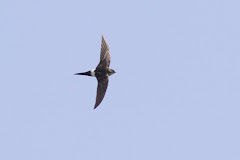
A spell of easterly winds at this time of year always increases the expectations that something unusual will turn up. I visited the local patch this afternoon in hope and wasn't disappointed when this little gem popped out in front of me. It was with a couple of Goldcrests and was the highlight of a day that also included a juvenile Red-backed Shrike, 5 juvenile Little Stints, 6 Black Redstarts, a cracking male Common Redstart, a Pied Flycatcher and several Wheatears. Not a bad haul. The winds are expected to stay easterly for several days, so who knows what will arrive next! There has been an influx of Nutcrackers in Denmark and Sweden in the last 10 days or so, so hopefully I'll get to see one of these delightful birds... will keep you posted!

Sunday, 7 September 2008

US election fever


View from 555 California Street, San Francisco, where we held a 2-day meeting with McKinsey and Co and experts on climate change.


Back safe in Copenhagen after the intensive 4-day trip to Mexico City and San Francisco (my body has no idea what time it is). Mexico City is one huge city... with an amazing historic centre sporting intricate architecture. Unfortunately Montezuma got his revenge in early, meaning I was quarantined to my hotel room for 18 hours as I experienced a bout of food poisoning (thanks Aero Mexicana!), so my experience of the city was limited.. However, I did get to see the Congress and meet with the heads of the three main political parties plus the Speaker and Chairs of eight Congressional Committees. There is immense interest in climate change in the Mexican Congress and they have an impressive national action plan to reduce their own emissions and deal with the impacts. It bodes well for our Americas forum in November, to take place in Mexico City.

After seemingly only just arriving we were off again to San Francisco. With the US election looming it was interesting to see the media coverage and talk to Americans about their political preferences. Our visit coincided with the Republican Convention and the speeches of VP candidate Sarah Palin and Republican nominee, Senator John McCain. Palin is an intriguing characater - she is young, relatively unknown on the political scene (as Governor of Alaska) and has some 'interesting' views. She wants Creationism to be taught alongside evolution theory in schools, she is against abortion under any circumstances (even rape or incest), is a gun-toting Moose hunter and does not believe in man-made climate change. In short she appeals to the Republican base, many of whom have doubts about McCain's tendency towards that dirty word - "liberalism" - so in many ways she is the ideal choice to shore up the Republican vote. To me she is scary and I find it very difficult to believe that a European country would put someone who doesn't believe in evolution into a position of such power, and it reinforces my view that, as a Brit, I share many more values and cultural ties with Europe than with the US.

The bounce in the polls from the Republican Convention puts the two candidates - Senators John McCain and Barack Obama - almost neck and neck. It really is going to be a close race between now and November. I can't help thinking that someone is going to make a decisive gaff between now and then and, given Joe Biden's (Obama's VP choice) history of inserting his foot in his mouth, it could be him..!

San Francisco is a very liberal city so there was strong support for Obama with merchandise being sold seemingly on every street corner. But the US is a diverse country and, although the educated liberals on the east and west coasts will almost certainly vote heavily in favour of Obama, the large swathes of the population in places like Texas will almost certainly vote Republican, even more so now that they are energised by the feisty Palin.

Given the global impact the policies of the US president have, I almost feel as if the rest of the world should get a share of the vote!

In the meantime, check out this great animation from those cads at JibJab - a summary of the US election in 3 minutes. Class.

Try JibJab Sendables® eCards today!


PS In answer to my question in the last post, we flew around Hurricane Gustav- avoiding the centre and the eye and crossing over the outer 'tails'. It was still a bit bumpy!

Sunday, 31 August 2008

Hurricanes and Kyoto

I am writing this from the lounge in Miami airport. I am on my way to Mexico City and then San Francisco for meetings on climate change. The current hurricane activity - with Gustav approaching New Orleans, poignantly exactly 3 years on from devastating hurricane Katrina, and Hanna developing into a strong hurricane north-east of Cuba - brings my work into sharp focus. Gustav is currently directly in our flight path from Miami to Mexico City and I am intrigued as to whether we will fly directly over it or, more likely, around it. (You can track the hurricanes' progress here)

It is commonly known that the number of hurricanes fluctuates on a natural cycle. This year is predicted to produce an above average number - 15 versus the long-term average of 12.4. The intensity of these hurricanes is determined by the sea surface temperature - hurricanes gain their energy from warmth. The warmer the surface temperature, the more intense the hurricane. So global warming, with its resulting higher sea surface temperatures, is predicted to increase the INTENSITY of hurricanes. It is less clear that it will cause MORE hurricanes.

My destination today - Mexico - is particularly concerned. It is in the flight path of many of the hurricanes that originate in the north atlantic. It is vulnerable to sea level rise and hurricane-related sea surges. So it wants to fight global warming.

Mexico is also in a unique position in the international negotiations on a post-2012 agreement. Under the Kyoto Protocol it was classified as a developing country and so, under the terms of the agreement, was not mandated to take on binding emissions reduction targets. However, it has since joined the OECD (an organisation of 'developed' countries) and will be expected to take on a binding target for the post-2012 period along with the rest of the developed world. At the same time, Mexico is a member of the so-called "+5" group of major emerging economies, along with Brazil, China, India and South Africa. This places Mexico in a unique position as a bridge between developed and developing countries.

My meetings over the next 2 days are centred on the preparations for a forum of legislators from the Americas, to take place in Mexico City in November. We very much hope to forge a ground-breaking compact between legislators from the developed (US, Canada and Mexico) and developing economies (Brazil, Argentina and the rest of Latin America) that calls for a long-term goal of reducing global greenhouse gas emissions by 50 per cent from 1990 levels (the baseline under Kyoto) by 2050. To get there, the agreement should urge developed economies to take on an aggregate binding emission reduction targets of between 25 and 40 per cent below 1990 levels by 2020. In return, the major developing economies should take steps to peak their emissions by 2020 with a view to taking on binding commitments thereafter, subject to industrialised countries meeting their target.

If we are successful, this would represent the first time that politicians from across the political spectrum, from both developed and developing countries, will have agreed 'in principle' on a long-term goal and an equitable way of achieving it.

Let's hope the hurricanes in the Gulf focus the minds...!

Friday, 22 August 2008

22 August

Another beautiful morning with hardly any wind and lovely morning sun. Made an early morning visit to Nordhavn where there had been a small 'fall' of birds. Two juvenile Red-backed Shrikes, a Wood Warbler, single Pied and Spotted Flycatchers, 5 Tree Pipits, 6 Yellow Wagtails plus tens of Whitethroats, Lesser Whitethroats and Willow Warblers. Nine Arctic Terns migrating west was a bonus.

Sunday, 17 August 2008

Shrike

An early morning birding session at Nordhavn produced the first juvenile Red-backed Shrike of the autumn. Also present was a single Tree Pipit, a Whinchat and several newly-arrived Chiffchaffs. Still lots of Lesser Whitethroats (the most common warbler at this site) and a few Common Whitethroats and Garden Warblers. Sadly no sign of the hoped-for Barred Warbler, Greenish Warbler or Citrine Wagtail. As I visit this site quite a lot (it is only 20 mins cycle ride from our flat) I thought you might like to see what it looks like.. I will take some photos of my own in due course but you can see some pictures of the habitat here. It is essentially a large area of wasteland on the edge of the industrial Copenhagen harbour with a couple of small freshwater pools, some scrub, an enclosed seawater basin, a small plantation and an area of grassland. Not the most picturesque site but, lying on a promontary on the east coast of Sjaelland, it does attract quite a few migrants. Black Redstarts and Wheatears breed, as do Little Grebe, Coot, Skylark, Meadow Pipit, Whitehroat and Lesser Whitethroat. Officially its a private site and it is fenced off but there is usually at least one hole in the fence, through which to gain access. It is used by fishermen, a few dog-walkers and a handful of birders on a regular basis so, if the fence is ever repaired, it's usually cut down within a day or so by the fishermen...!

This morning I stumbled on a group of three young Danes sleeping in the open air with just sleeping bags and a small fire for warmth.. not the most attractive place to camp out in the wild but each to their own.

Friday, 15 August 2008

Just a normal evening in Nyhavn...


.... you know the scene.. sitting in your living room watching a DVD when all of a sudden the mast of an old sailing ship slowly passes the window. This one is called the "Bona Gratia" and was apparently built in 1903. For those of a sailing disposition it's length is 17.24 metres, its beam 4.95 metres and its callsign is "OWJZ" (whatever that means). In summer Nyhavn is visited by many traditional sailing boats. In fact, to maintain the traditional ambience of Nyhavn, vessels must be a certain age, wooden and with sails to be allowed entry. All the posh yachts with helipads and jetskis must moor further up the sea front with the cruise ships and other riff-raff... Quite right, too.

Sunday, 10 August 2008

Northern Sjaelland

To celebrate my birthday Libby and I planned a walk along part of the northern coast path around the traditional Danish village of Tisvildeleje. See map here. It wasn't a particularly nice day with cloud and drizzle on and off but, for a walk, it was ideal weather. The area is reminiscent of east Norfolk with a sandy beach, coastal dunes and woodland of birch and pine. We walked about 10 miles during which time I saw two new species for Denmark - a juvenile BLACK GUILLEMOT (201) just offshore and a flock of 46 COMMON CROSSBILLS (202).

We stopped for a late lunch in a local cafe before catching the train back to Copenhagen to snuggle up for the latest episode of West Wing (we are hooked). Rock and roll...

Thanks to everyone who has sent birthday messages!!

Saturday, 9 August 2008

29 July and 8 August

29 July

Heavy wader passage today with 100+ Wood Sandpipers at Vestamager with a few Spotted Redshank, Snipe, Black-tailed Godwit, Avocet, Dunlin and a couple of Curlew Sandpipers. At one point a flock of 37 Wood Sandpipers flew in from the north-east, circled and landed on the scrape to feed.. I don't think I have ever seen more than 3 together in Britain so the sight was something to behold..

8 August

A cycle ride to Vestamager in between very heavy thundery showers didn't turn up much in terms of waders - a few Wood Sandpipers, a handful of Common Sandpiper, a Black-tailed Godwit, a few Grey Plovers and some Dunlin. Wader passage has definitely tailed off. Around the fort there were the first returning Whinchat (4) plus several Sylvia warblers including good numbers of Lesser Whitethroat, Common Whitethroat, a few Garden Warblers and a couple of Blackcaps. A swimming Grass Snake was a bonus. Unfortunately a scan of the local pine trees failed to turn up any Two-barred Crossbills (there is something of an 'invasion' of these normally very scarce birds into Western Europe at the moment with up to 8 on Fair Isle at present).