Sunday, 9 November 2008

Bats


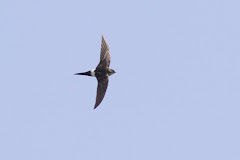
Photos: first two - Brown Bats at Vestamager, including an acrobatic individual doing an impressive 180 degree head twist to catch a mosquito; and a late afternoon scene at Vestamager Nature Reserve

Saturday was a glorious day - still, with a clear blue sky and a late autumnal chill in the air. I decided to look for Tengmalm's Owl in Kongelunden forest, figuring that with the recent irruption of this species in Sweden, there was a chance that one would have made it to this forest close to Copenhagen airport. The species has been seen there before in irruption years and is still recorded most springs. Despite checking almost every pine, spruce and fir tree in the forest, I had no luck. So I wandered towards Vestamager, the nature reserve made up of wetlands and wet birch forest. On my way, a fantastic Rough-legged Buzzard was hunting from a treetop in an open field. Living here has enabled me to get to grips with this species and learn the id characteristics that separate it from Common Buzzard (which can be incredibly variable). The longer wings (to me they almost have a kite-like appearance), pale/white upper tail, dark belly and large dark carpal patches on the underwing separate this species from its much commoner cousin and I was able to study this individual for around 20 minutes before it was flushed by a dog-walker.

Further along the path I was surprised to come across a group of 8 large bats hunting insects over one of the flashes in broad daylight. I was told by a local that these are BROWN BATS and are Scandinavia's largest species of bat. They are day-flying and migratory and are apparently seen in this area most autumns. If anyone out there knows anything about bats and can confirm the species, I would be interested to hear from you.

On Sunday, Libby and I went for a walk around the coastal wood at Sydvestpynten where we vistited the resident Tawny Owl that has returned to roost in the same tree for at least its third winter.

The hunt for Tengmalm's Owl continues..... maybe I should ask the Wise Woman for advice...!

Friday, 7 November 2008

How many rare birds do we miss?

I came across this blog entry from David Sibley and thought I'd share it with you. Food for thought as we are wandering the migration hot spots. I am sure observer coverage in Europe is higher than in the US but, even so, I am sure the same principle applies.

Sunday, 2 November 2008

Mandehoved

Another morning at Mandehoved for raptor migration produced 33 Red Kites, 1 adult White-tailed Eagle, 1 Goshawk, 15 Sparrowhawks, 6 Rough-legged Buzzards, 7 Hen Harriers and 15 Common Buzzards. However, overshadowing the raptors were the skeins of geese that seemed to be constantly passing south. Over 2,000 Barnacle Geese and 1500 Brent Geese were counted in four hours with 5 White-fronted Geese, 4 Bean Geese and small numbers of Canada Geese mixed in. The supporting cast was made up of finches - good numbers (in the 100s) of Chaffinches, Bramblings, Redpolls (numbers seem to be well up this autumn) and Siskin. A flock of 60+ Waxwings were my first of the autumn and over the weekend good numbers of these cracking berry-eating birds were seen all across Denmark.

At lunchtime, after the migration was beginning to tail off, we visited the lighthouse at Stevns Fyr to look for Tengmalm's Owl (one was heard there the night before). The first tree we looked in produced a roosting Long-eared Owl but unfortunately, despite looking in every tree in the lighthouse garden, there was no sign of any Tengmalm's. We wondered whether the presence of a Long-eared would have made it move on (I think I have read somewhere that Long-eared Owls eat Tengmalm's Owls which would be good enough reason to find somewhere else to roost!). There have now been an incredible 252 Tengmalm's Owls ringed this autumn at Falsterbo in Sweden (just across the water from Stevns in Denmark) - the highest total ever. So it is only a matter of time before one of these fantastic owls gets pinned down in Denmark. You can see a photo of one at Falsterbo last week here. They are usually very confiding during the day (once the roost site has been found - which is by no means easy), so I am hopeful of seeing one or two this winter. Remarkably, a Great Grey Owl was also seen at Falsterbo this week - only the second ever in southern Sweden. This could mean that these huge owls are also on the move. Having never been recorded in Denmark, Great Grey Owl would cause much excitement if one was to make the crossing from Falsterbo....

With Nutcrackers, Tengmalm's Owls and possibly Great Grey Owls on the move this winter, hopes are high for some of the other scarcer visitors including Pygmy Owl, Hawk Owl and Pine Grosbeak - I will be checking my local woods very carefully!

Wednesday, 22 October 2008

Scilly '08


Photos: Wryneck (by Peter Ransome); Sociable Lapwing (from Kazakhstan); Lapland Bunting (from guess where).

I have just returned from my annual pilgrimage to the Isles of Scilly, where the bird watching is unrivalled at this time of year. Vagrants from east and west seem to congregate on the 'magical isles' in October and it was evident this year with the star birds being a SOCIABLE LAPWING from Kazakhstan and GREY-CHEEKED THRUSH from the US being seen at the same time. There is nowhere else in the world where such an occurence could happen.

It was far from a 'classic' Scilly week, compared with the legendary years of 1985, 1987 and 1999 that brought enigmatic birds such as Yellow-bellied Sapsucker, Yellow-billed Cuckoo, Philadelphia Vireo and Common Nighthawk but, nevertheless, Scilly offered unrivalled birding all week. There was always an opportunity to see Lapland Bunting, Red-eyed Vireo, Yellow-browed Warbler or Wryneck and this year the weather was like summer for most of the week. Watching a Snow Bunting on Peninnis wearing just a t-shirt was quite surreal - normally it's freezing and with a biting wind when one gets to grips with this Arctic breeder.

The usual crack squad of Andrew Harriss, John Harris, Peter Ransome and Tim Hemmings accompanied me all week and find of the week must go to Tim who found the Red-backed Shrike on Tresco. Whilst not a mega-rarity, this Shrike is still a much sought-after bird and, having disappeared as a regular British breeding bird, it is always pleasing to see one on Scilly. Hot on the heels of Andrew's Pallas's Warbler last year, Tim's find made sure we kept up our contribution to the week's birding highlights.

We all felt that there was a possible increase in the numbers of birders on Scilly this year - a good sign. Over the last 10 years the numbers seem to have dropped dramatically from around 1,200 to around 250 with most big "listers" choosing to stay on the mainland in case the autumn's hot rarity turns up on the mainland or on the northern isles of Shetland or Orkney. This is obviously good and bad - good because you can walk around without being in a crowd and bad because there are fewer pairs of eyes to find the rare birds. Also evident this year was the number of women birders. I have to say that usually (and I can't think why...) the population of birders on Scilly in October is about 98 per cent men (ok, possibly 97 per cent). But this year there were women everywhere, and not just accompanying birding spouses but groups of women, too..! I won't speculate as to the reason (because I have no idea) but, nevertheless, it's a very welcome development.

It wasn't just birds that entertained us all week - there were numerous sightings of Common Dolphins around the islands and we also managed to catch up with the St Martin's Ant (a very rare species of red ant found only on St Martin's and, bizarrely, Surrey) and Smooth Stick Insects (imported with rare plants brought in to the Tresco Abbey Gardens from far-flung locations).

All in all a top trip, as usual and we are already booked up for Scilly 2009... top!

Friday, 3 October 2008

Nutcracker


I have reported in a previous post about the large movement of Nutcrackers in Scandinavia with several hundred being seen in southern Sweden and tens being reported across Denmark at coastal migration spots. However, unless you have been in the right place at the right time it has been very difficult to catch up with one. Until now! Over the last few days one has been frequenting some hazel bushes near the green of the second hole on Dragør golf course, near Kongelunden. It is an area I know well as Kongelunden is one of my two local patches, so I headed off down there early this morning to see if I would be lucky. Sure enough, within about 15 minutes of arriving, a Nutcracker flopped out of the wood and into the small stand of hazel. After collecting a nut it flew back into the wood, probably to hide it somewhere, and then reappeared a few minutes later. It did this at least 8 times in the two hours I was there, so it looks as if it is pretty settled, as long as the nuts last... It got spooked a few times by golfers but, as soon as they moved on to hole 3, it was back.. A cracking bird and one I have wanted to catch up with for a long time. Given the numbers on the move this autumn, maybe there's a chance one will make it across the North Sea to the UK... now that would cause some excitement!

Details of the Kongelunden bird can be found at: www.dofkbh.dk.

The visible migration today at Kongelunden was exceptional with the sky full of Chaffinches, Bramblings, Siskins and the occasional wagtail. Three Hawfinches were a highlight. Incredibly, at Falsterbo today they logged nearly half a million Chaffinches! Now that's what I call vis-mig!

Sunday, 28 September 2008

Predictions

At this time of year birders like to predict what will turn up, mostly based on a combination of the weather forecast and a large dose of guesswork. This blog entry from the Leicester Llamas sums it up nicely...

Wednesday, 24 September 2008

Let's hear it for EA!


East Anglia... greatest place in the world.

Red-breasted Flycatcher


It was a stunningly beautiful autumnal morning today with light easterly winds and a clear blue sky. With several days of easterlies I felt positive about finding something good at Nordhavn. There was a good passage of visible migration with the first notable movement of Bramblings (mostly north!), Chaffinches, Siskins, Meadow Pipits, the odd Tree Pipit and 2 Grey Wagtails. I began to check the scrub with the thought of Yellow-browed Warbler in my mind. There were good numbers of Goldcrests and the odd Blackcap and Chiffchaff. Then, as I turned a corner into a very sunny and shaded area, I caught sight of a flycatcher that flitted up and over the top of the shrub. I didn't get much on it at all except that it looked rather plain and small. It's a little late for Spotted or Pied here in Denmark but, of course, both were more likely than anything rarer. For the next 10-15 minutes I saw nothing, despite searching the surrounding vegetation carefully. So I wandered off thinking that I'd cover the rest of the scrub before returning later to see if the bird had returned to the original spot. After half-heartedly searching the rest of the area with my mind on what might have been, I began to convince myself that the bird was a probable Red-breasted Flycatcher. So I returned and, almost immediately, there it was - a first-winter Red-breasted Flycatcher (Danish name - Lille Fluesnapper) feeding very actively. My first half-decent find in Denmark, at last! I watched it for about 15 minutes and managed to take a few decent photographs before putting out the news. After a further 30 minutes people began to arrive, most of them in suits or office attire skipping off for an hour or so to catch up with this scarce Danish bird. Just as I thought the excitement was over a ringtail harrier appeared from nowhere and flew almost tern-like over the scrub before disappearing behind some ships in the dock. It had to be a Montagu's or Pallid but unfortunately I didn't get enough on it... Then, as I turned back towards the flycatcher, a monochrome bird caught my eye. I managed to get my bins on it and there was another decent bird - Great Grey Shrike!

Carlsberg don't do birding but if they did, every day would be like today!